

Prof. Xu Long
Northwestern Polytechnical University, China
Xu Long is a Professor and Doctoral Supervisor at the School of Mechanics, Civil Engineering and Architecture, and serves as the Assistant Dean in charge of International Cooperation and Exchange at Northwestern Polytechnical University. He received his bachelor's degree from Tongji University, his master's degree from the Institute of Mechanics, Chinese Academy of Sciences, and his Ph.D. degree from Nanyang Technological University, Singapore. After returning to China in 2015, he joined Northwestern Polytechnical University and was successively promoted from Lecturer to Associate Professor, and then to Professor.
Prof. Long's research focuses on the extreme mechanics of chip packaging and protective structures, encompassing multi-field coupled multi-scale material constitutive models, damage mechanism analysis, and structural life prediction, with significant application value for enhancing the reliability of China's homegrown chips. He has been selected as a recipient of the National Young Talent Program and the Stanford University Top 2% Most-Cited Scientists Worldwide, and has been elected as a Fellow of IAAM and a Senior Member of IEEE. He has published more than 150 SCI-indexed papers in leading international journals in the fields of solid mechanics and electronic packaging, including over 90 papers as the first or corresponding author. He has also authored 3 academic monographs, including Mechanics of Electronic Packaging, and has led multiple research projects, including the National Natural Science Foundation of China General Program and industry collaboration projects with Huawei and ZTE.

Prof. Guiyin Li
Guangdong University of Petrochemical Technology, China
Doctor of Engineering, professor, Clinical medicine/pharmacy double postdoc, doctoral supervisor, Guangdong University of Petrochemical Technology second-level professor.She is mainly engaged in the research of bioelectric analysis, biomedical sensing, nano targeted drug diagnosis and treatment.She presided over 2 National Natural Science Foundation projects and 7 provincial and ministerial level projects. She won the Guangxi Science and Technology Progress Award and Invention Award 3, Hunan Province "Furong hundred Gang star", Hunan Province ordinary colleges and universities backbone teachers and other honorary titles. He has published more than 60 SCI research papers. It has applied for 45 national invention patents and authorized 22.
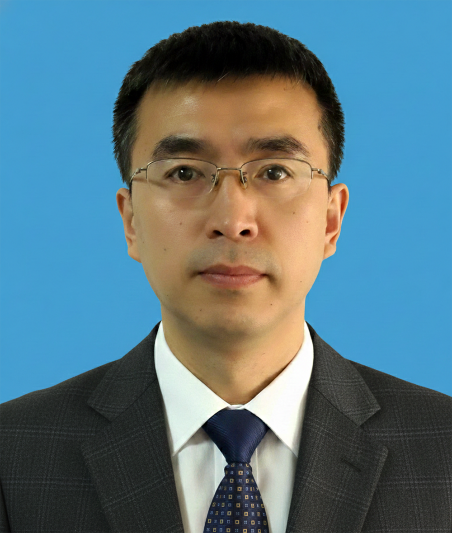
Prof. Yunfeng Qiu
Harbin Institute of Technology, China
Prof. Yunfeng Qiu has published over 110 SCI papers, more than 90 as first or corresponding author in journals such as JACS, Adv. Mater., Appl. Catal. B-Environ., Small (4 articles), Chem. Mater., and J. Mater. Chem. A. Four papers have been listed as ESI Highly Cited; he has also contributed an invited book chapter for Elsevier. His Google Scholar citations exceed 5,200, with an h-index of 42, and he holds 8 granted invention patents. He has led and participated in more than 20 projects including key programs funded by national ministries, projects from national ministries, major and general/youth programs of the National Natural Science Foundation of China (NSFC), etc.
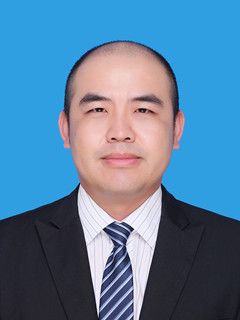
Prof. Haitao Li
Jiangsu University, China
HaitaoLi, male, holds a Doctor of Engineering degree. He is a specially-appointed professor and doctoral supervisor in Jiangsu Province. The design of new carbon-based functional materials and their research in fields such as catalysis, sensing and clean energy. Has presided over (6 in China and 4 in Australia) and participated in multiple scientific research projects The research achievements engaged in have been published in the form of more than 100 SCI papers in authoritative academic journals, such as Angew. Chem. Ed. Int., Advanced Materials, ACS Catalysis and other international mainstream journals. It has been cited over 12,000 times (Google Scholar), with an h-Index of 42. Four articles have been selected as cover articles, and there are 9 ESI highly cited articles. Several works have been highlighted and reported by NPG Asia Materials, Australian Chemistry Society, etc., and 10 Chinese patents have been authorized.